
This battle began, as so many goblin plans do, with confidence and immediately fell apart.
After the longest hiatus, Cowabunga Journal is back bringing you Battle Reports for my favourite game: Warhammer Renaissance. If you don’t know what WR is I will tell you: It is a fan created amalgamation of Warhammer editions 3rd-8th. It is run in a Facebook group primarily. Go to Facebook and search for Warhammer Renaissance and the rest will reveal itself.
Nuff talk: Now on to the game!
Background
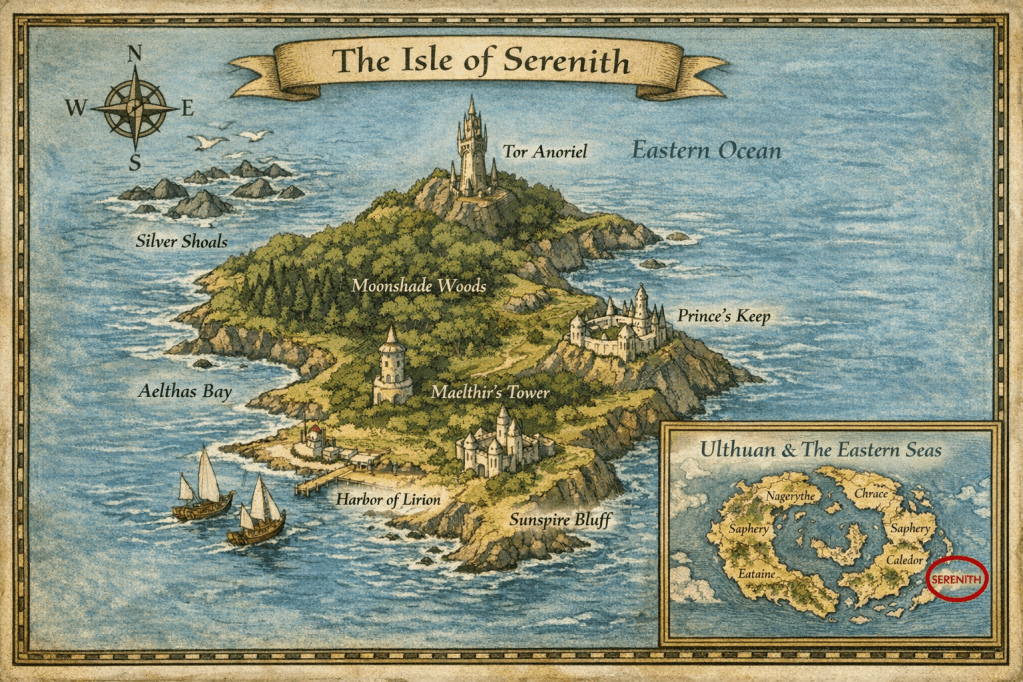
This is the first battle in a five game narrative campaign set on the small High Elf isle of Serenith, a remote outpost off the coast of Ulthuan.
In recent weeks, crude goblin vessels have been sighted approaching the island. The local commander, Prince Serelyon the Unconcerned, considers the threat laughable. To him, this is not an invasion but an annoyance that can be dealt with swiftly and elegantly. His intention is simple. He will ride out on his griffon, scatter the greenskins, and return to his marble halls before the wine cools.
Only one voice counsels caution. Maelthir the Grey, a shrewd and experienced mage, senses something wrong in the winds around Serenith. He suspects the goblins are not here by accident and not in such small numbers as they appear. Unconvinced by the prince’s confidence, Maelthir chooses to accompany the force out of concern.
Thus the first battle begins.
Not a war, the prince insists.
Just a demonstration.
Army Lists
High Elves
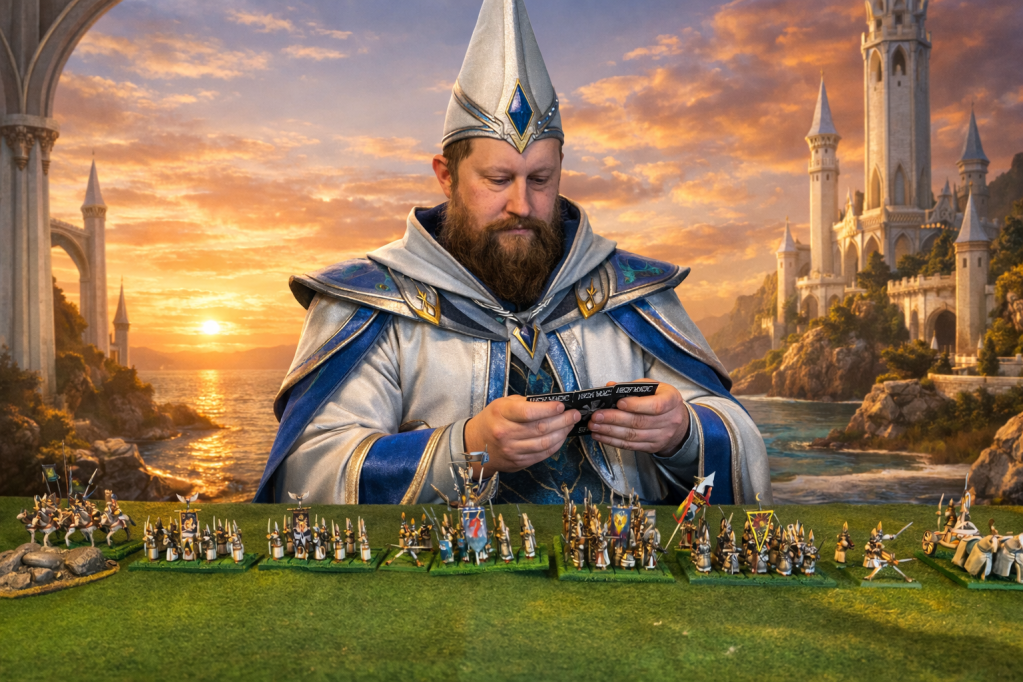
High Elf Mage level two using High Magic
Hero with the Moon Bow
Hero on Griffon
Twenty Spearmen
Around twenty Sea Guard
Ten Archers
Ten Archers
Five Reavers
Five Reavers
Fifteen Swordmasters
Chariot with scythed wheels
Bolt Thrower
Bolt Thrower
Orcs and Goblins
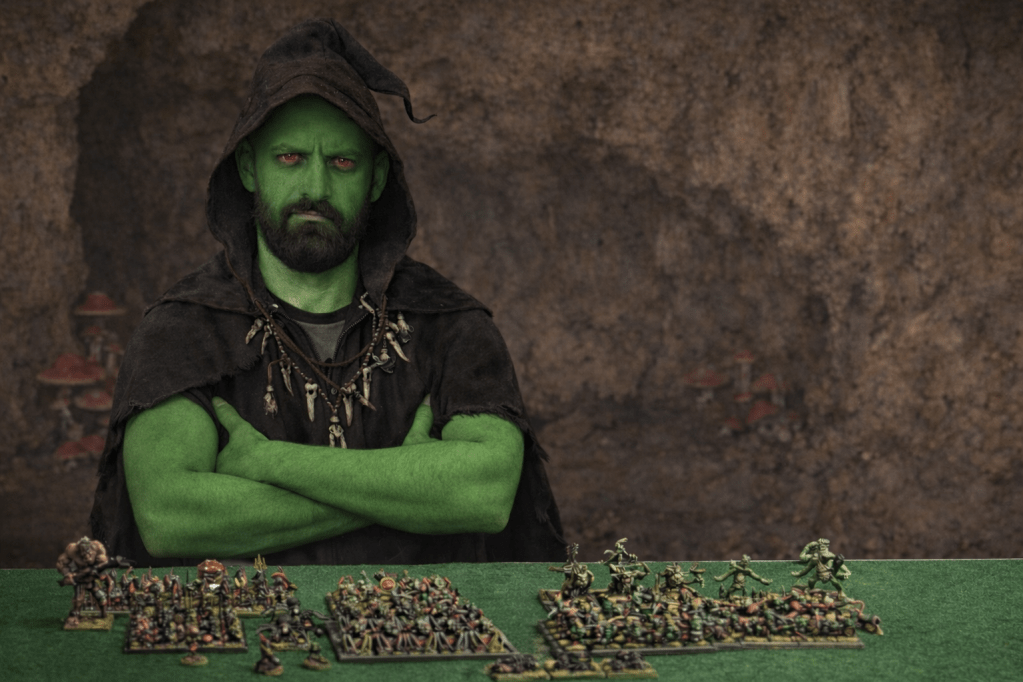
Night Goblin Shaman level four with Crown of Command and scrolls
Forest Goblin Battle Standard Bearer
Forest Goblin Big Boss
Forest Goblin Big Boss
Forest Goblin Big Boss
Thirty seven Forest Goblins with spears and shields
Twenty Forest Goblins with bows
Forty Night Goblins with bows and three Fanatics
Twenty Night Goblins with spears and shields
Ten Forest Goblin Spider Riders
Three River Trolls
Four Monstrous Spiders
Spider Swarm with three bases
Giant
Giant
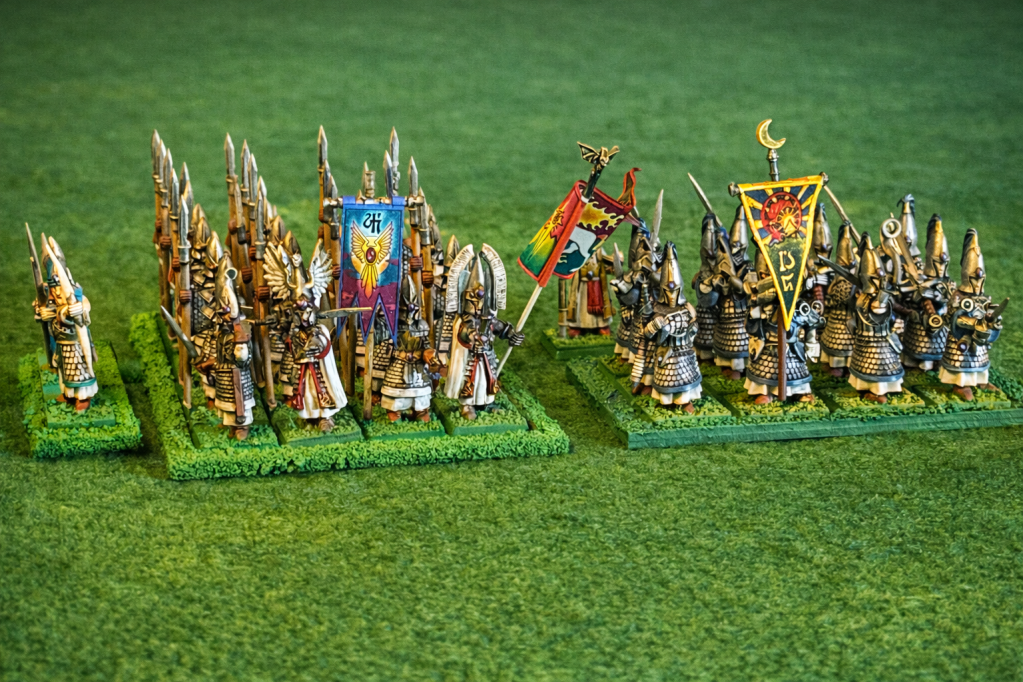
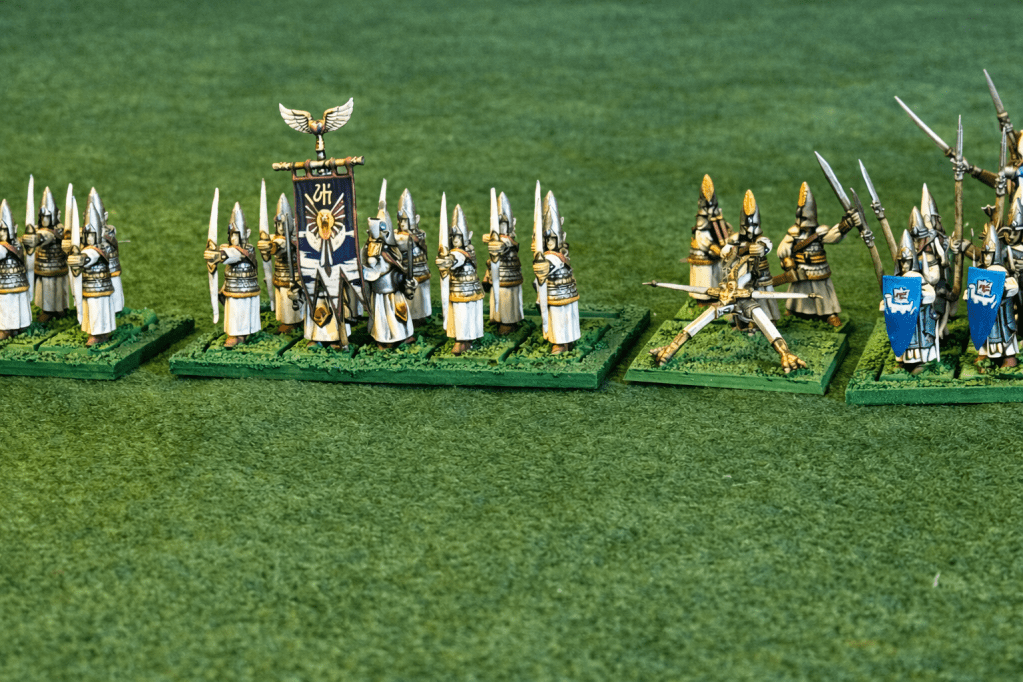
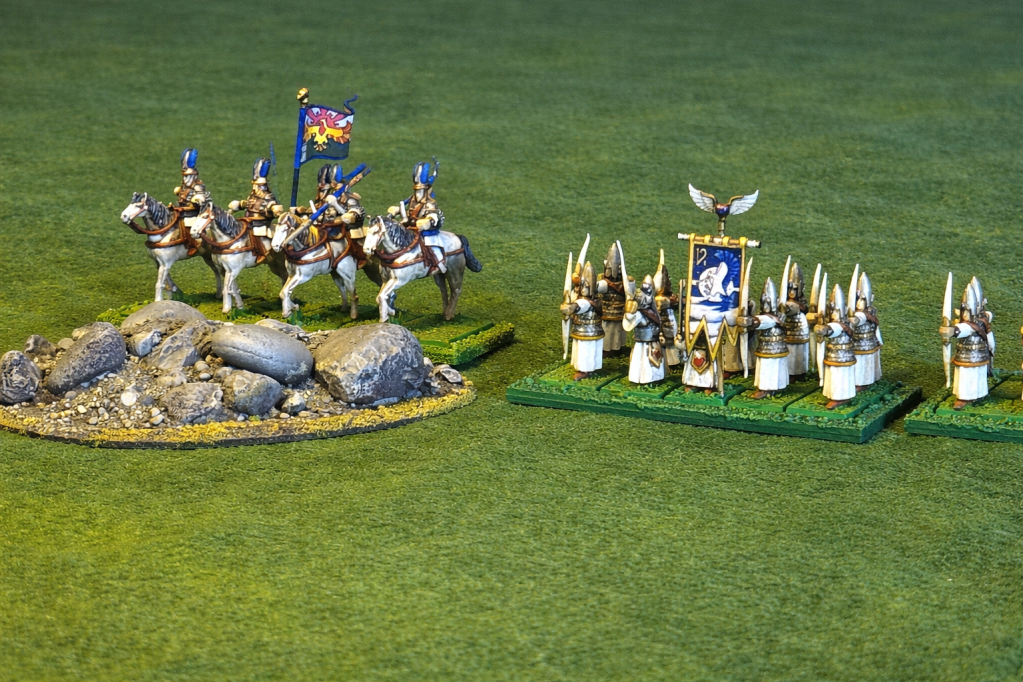
The High Elves arrived with a precise and disciplined force. Bolt throwers and archers formed a solid firing line, infantry blocks waited to counter-charge, and fast elements hovered on the flanks. A griffon-mounted hero loomed as a potential terror weapon, ready to strike where goblin nerve might fail. It was an army built to control the pace of the game.
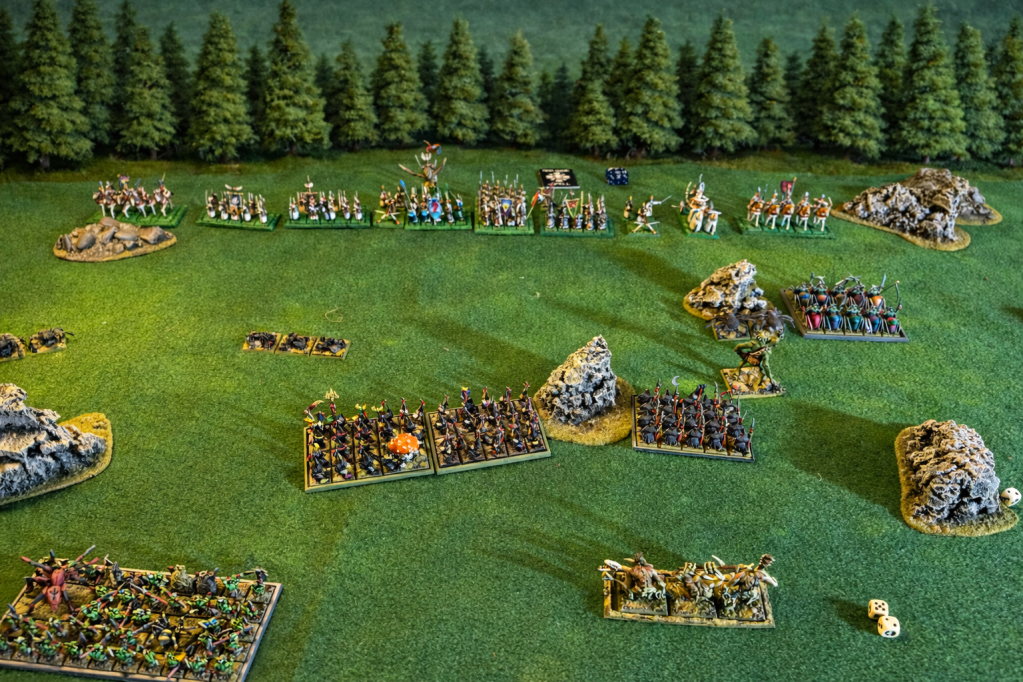
The Goblins answered with excess rather than control. Four large infantry blocks crowded the centre, bloated with characters and hidden Fanatics. Each flank was anchored by a Giant and pairs of Monstrous Spiders, while smaller spider creatures skittered forward with malicious intent. The plan was not subtle. Everything would advance and something would eventually break.
The Goblins won the first move and immediately demonstrated why leadership is more a suggestion than a rule. Units squabbled, Trolls stared blankly into the distance, and parts of the line simply refused to move. Spider Riders surged ahead without orders, while the rest of the army pushed forward as fast as it could. Magic achieved nothing, but the battlefield closed rapidly.
The Elves struck back without hesitation. Reavers and a chariot smashed into the exposed Spider Riders, who failed their nerve, fled a pitiful distance, and were run down. A nearby Giant, left outside the General’s influence, panicked at the sight and turned to flee as well. In moments, the Goblin right flank went from threatening to irrelevant.
Elven shooting followed, but it never found its rhythm. A few goblins fell, yet the advancing mass was too broad and too close to be meaningfully thinned. The green tide kept coming.
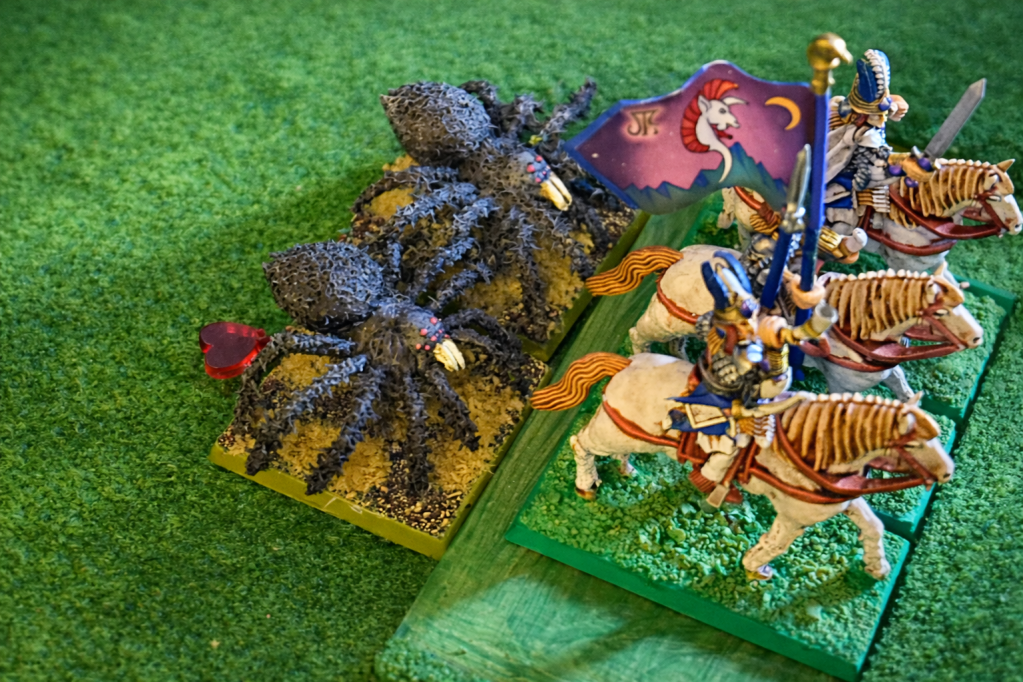
As the game unfolded, the spiders began to dominate the table. Spider Swarms crawled across the field and overwhelmed a bolt thrower in a frenzy of limbs and fangs. The Reavers who had enjoyed their early success were later hunted down from behind by Monstrous Spiders, their vaunted mobility undone by creatures that could see and strike in every direction. A chariot that had smashed through Goblin spearmen soon suffered the same fate, caught and destroyed once the spiders finished feeding.
Not all monsters met heroic ends. The Giant that fled early never stopped. Turn after turn it shuffled away, passing Leadership tests yet barely moving, until it eventually wandered off the battlefield entirely.
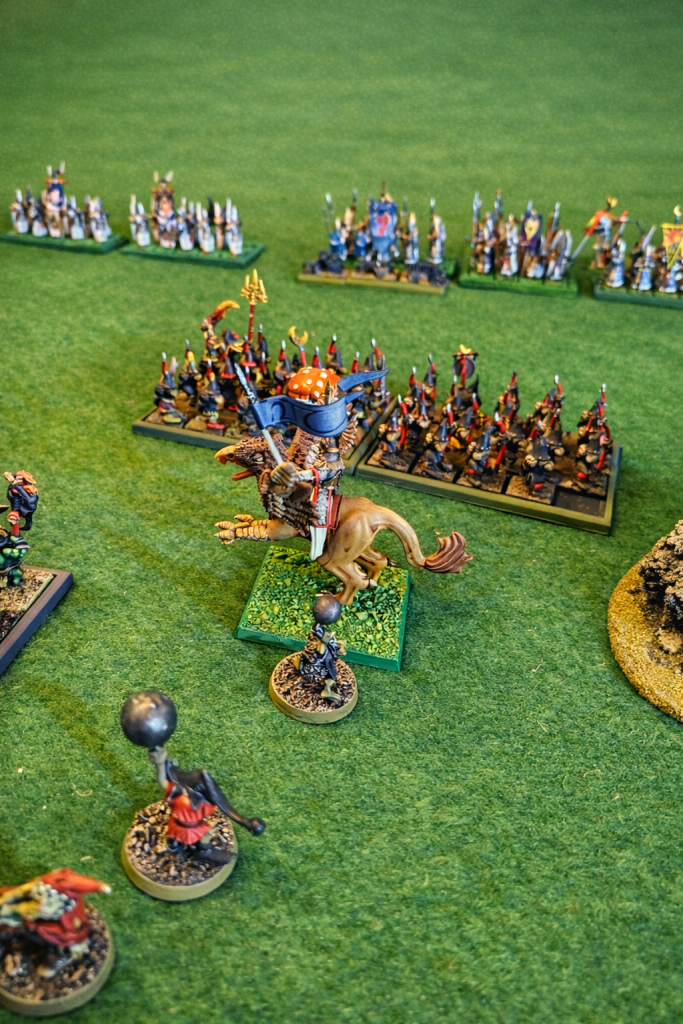
The most dramatic moment came when the High Elf hero boldly landed his griffon in the heart of the Goblin army, hoping to unleash terror and collapse the line. Instead, three Fanatics were released straight at him. They smashed him out of the saddle, leaving an enraged griffon alone behind enemy lines and three whirling lunatics loose among the Goblins themselves. Terror changed sides instantly.
On the opposite flank, the remaining Giant proved far more cooperative. It rolled up the Elven left, chased off the Reavers guarding that side, and then tore through the archer units with help from a single Monstrous Spider. The Elven shooting base collapsed under brute force.
Late in the battle, the Night Goblin bowmen attempted a clever retreat when charged by Spearmen and Swordmasters, hoping to strand the Elves in front of fresh Goblin infantry. They rolled a miserable three inches for their escape and were cut down anyway. It was a good idea betrayed by cruel dice.
Throughout the game, Goblin magic was sharp and economical. ’Eadbutt and Mork Wants Ya steadily crippled enemy heroes, while scrolls shut down Elven spellcasting almost entirely. The Foot of Gork appeared once, crushed a handful of Swordmasters, injured itself on something sharp, and never returned.
By the end, the High Elves had lost their speed, their shooting, and most of their leadership. The Goblins, despite early chaos and one missing Giant, controlled the battlefield through sheer pressure and unpredictable violence.
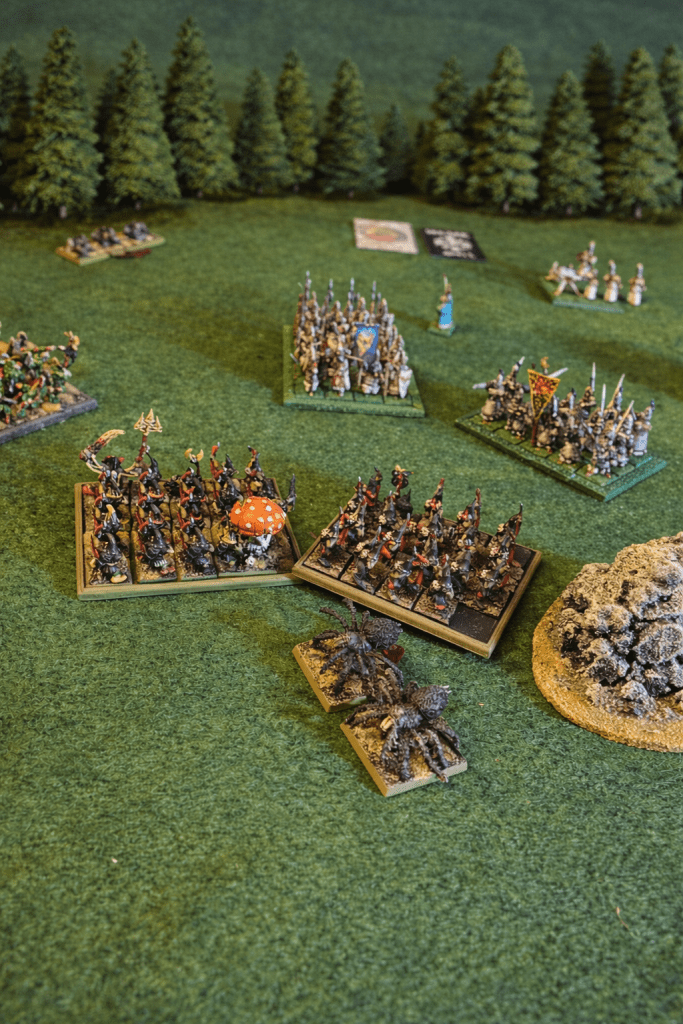
It was not elegant, disciplined, or reliable. It was goblin victory.
 Cowabunga Journal
Loved this Dr. and also good to see a wise Goblin using the Crown of Command
LikeLike
Wise in the sense that I constantly kept my general out of distance to anything taking LD-tests? Yes yes very wise! HAHAHA! 😀
LikeLike
great looking game… I love Goblins and actually wanted a 2000 point goblin army, never managed it, but have now printed a swamp goblin army
LikeLike